disclaimer

I have decided to ditch the corporate attire for 10 months(ish) and embark on the adventure of a lifetime.. being new to the world of 'blogging' you should see this journal grow and evolve along with my discovery some of the most amazing places on Earth!

Friday, 15 November 2013

Quilotoa Loop

Feeling burnt out from constant travelling, tours and a wee bit of partying, I needed to relax for a few days and regaine some backpackers vitality. Paracas seemed like a perfect option as it offered a beach front hostel (literally in the sand) called Kokopelli, in a small town that was known for little more than Islas Ballestas, commonly known as poor mans Gallapogas. In the end I avoided the opportunity to be shat on by thousands of sea birds and spot a few sea lions, opting inststead for some chilled out beach time.


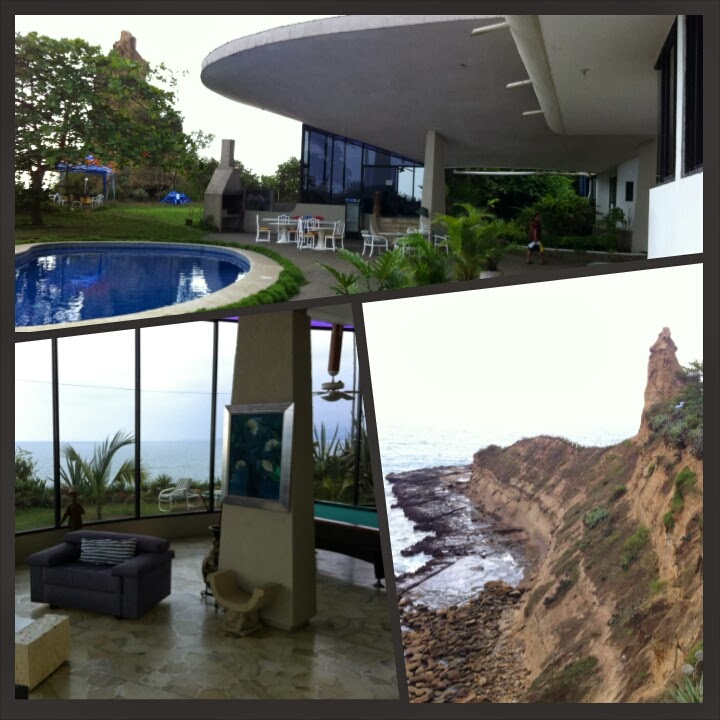
With time in Peru now pushing its limits, I decided on skipping the north and took a 3 hour bus up to the capital, Lima, connecting with a 28 hour Cruz Del Sur bus which took me all the way up to Ecuador's second largest city, Guayaquil. It felt like just another big city to me, so the following morning I was on the next bus out to the nearby surf and party town of Montanita. On the way I sat next to Daniel, a surfer from Colombia who convinced me to come and stay with them at a big white mansion on a cliff at the end of the beach. The days to follow consisted of kicking back, sampling some of the local specialties including a delicious raw fish breakfast dish and enjoying some of the nightlife this beach town had to offer.


Next stop was Latacunga, where I was headed for Quilotoa Loop, a 3 day trek recommended by numerous Gringo's along the trail. Parking up at Tiana's guesthouse, they were kind enough to provide clear directions and a map for the loop. On the hour long local bus ride to the start I met up with Cam and Owen, a couple of Aussies with a similar plan. The first days hike is mainly focused around Quilotoa lake, where you spend around 3 hours carefully walking around the volcanic rim. Such thick cloud wash came in that we could barely see in front of us and spent the second half of the walk with no idea where along the rim we were.


The next section was supposed to be an "easy walk" to our nights accommodation, which ended up having a small canyon in the middle of it, not what our tired legs were anticipating. Having seen the highlight of the trek, I convinced the boys to catch the local milk truck with me in the morning, stopping to collect fresh pots of cow juice from all the families along the way, a much easier and preferable way to see the rest of the trail. Our adventure was topped off with a delicious feed of chicken necks and intestines.


Thursday, 7 November 2013

Sandboards and Dune Buggies in Huacachina

Deciding to splurge out and book Cruz Del Sur, who are known to be the preferential option to travel in Peru for security and comfort, I was pleasantly surprised to see the Frenchy (Jean) from the Amazon tour waiting in the pre boarding lounge, also heading to go to Huacachina. Cruz Del Sur are a step above the rest, generally having their own bus station and taking extra steps for security like stringent passport checking, bag receipts and filming each person in their seat at pre departure.

The overnight bus journey from Arequipa ended in Ica, where a short 10 minute taxi ride dropped us in an amazing desert oasis known as Huacachina. This is your stereotypical oasis with a large pool of water surrounded by palm trees and vast field  of sand dunes, also a few desert style dwellings to cater for the gringo visitors. We checked in to Desert Nights hostel and ordered the famous breakfast pancakes, these things were HUGE, stuffed with fresh fruit and covered in chocolate sauce.

Originally I had planned to spend a few days chilling here although the warm climate and clear waters of Central America are calling, so we joined an afternoon dune buggy and sandboard tour to tick this town off in the one night. Having cheaped out and gone the standard class on Cruz Del Sure (a 140 decline instead of 160, which does make quite a significant difference, especially if your tall), we crashed out for a few hours siesta in the afternoon warmth.

Now I have sort of sandboarded once or twice in my life, so I was advised to go for the standard board which allowed both standing and lying down options, whilst Frenchy who was an experienced snowboarder went for the snowboard which has special boots that lock you in. Having being advised that we were allocated the 'crazy driver', our group of around 10 were bundled in to one of the serious looking dune buggies that we'd heard roaring around the oasis all day and  powered off through the dunes.

Our driver  must have one of the most fun and exciting jobs in all of Peru, getting to drive a powerful dune buggy like a manic, filled with ecstatic  tourists, drifting around a big kids playground. Some of these dunes were definitely on the large side and he took great pleasure in gliding up right to the sharp peak (where you has no idea what would on the other side) and either sliding right up to the edge, or gunning it over in a rollercoasteresque thrill ride.

For my first hill I went along with the rest of the group on our stomachs down a very steep dune, with your head only centimetres above the sand, it felt super fast as we rocketed to the base. Having seen Frenchy do it standing up, I gave it a go on my second hill and tumbled off the once when my left rail dug a little deep in the sand, luckily managing to catch my sunnines before a hot clamber up the dune to collect them.

On our third hill I was ready to give standing up another go now that I had a better idea about the technique until Frenchy went right up to the higher peak above us. He flew down in top form until just over half way when something went wrong and he flipped board over head 4 or 5 times. We all thought he must have snapped his neck for sure, although it turns out later it was a broken ankle and a very sore shoulder, very unlucky for him as he will need to head home for the 6 weeks staying off the ankle. Not wanting a repeat effort, nobody else bothered standing up on of last two bigger hills as we has just as much fun flying down face first on the thrill ride.


Just in time for a magic sunset the driver took us to a dune above Huacachina where we laid out and watch the golden globe set over our playground


Tuesday, 5 November 2013

Arequipa and Colca Canyon

Machu Picchu would probably be the most well known reason for tourists to visit Peru, not far south (9 hours bus) there is another popular hike, the Colca Canyon, that is slowly growing its gringo status. The canyon itself is based around the Colca River and is more than twice as deep as the Grand Canyon, making the list for one of the deepest in the world with  4,160m depth. The local inhabitants still continue to cultivate their pre-Incan stepped terraces.

First order of the day was a stuffed pepper with potato cake, served up in the local markets where they don't hold back on the fire factor. The food adventure continued at an annual event help for all the restaurants and bars to show off their produce, a perfect opportunity to sample Anticucho (cows heart on a skewer) and Cerviche (raw fish cooked in citric juices).


As per a new formed tradition, Tom and Elyna were waiting on the bus when I was picked up at 3am to head out for our 2 day canyon trek. The trek down was relatively easy although a rather steep loose rock path was waiting to claim its next victim. At the base of the canyon we crossed  the river and were rewarded with a stroll through lush plantations of various fruits and vegetables. The only produce in season were avocados and figs of which we could pick and eat plentiful amounts on our way. We did mange to spot one Condor high up circling the cliffs above, more exciting than the hour we spent on the way in, parked alongside hundreds of tourists up on top of the cliff waiting to spot one of these magnificent birds.


After around 4 hours hiking (at somewhat of a slow pace) we eventually got a brilliant view of the Oasis below, its pools beckoning us to frolick in the last of the afternoons warmth. Not wanting to dampen the party mood too early, a  bunch of the lads collected drift wood along the river and set up a blazing bonfire, whilst we sipped cocktails late in to the evening.

Much to our delight we had to wake at 4am to start the two hour gruelling hike up to the top of the canyon, providing the perfect opportunity to sweat out the previous evenings festivity. We were rewarded on the way back to Arequipa with a visit to some hot spring pools and stopping to drink Colca Sours, a local version of the famous Pisco Sour, instead blended with a sour cactus fruit.


Saturday, 2 November 2013

Machu Picchu

Cusco was one of those places that everybody seems to quote as the favourite on the gringo trail, so I was itching to get there an see what all the hype was about. Famous for being the capital of the Incan empire, before the Spanish invaded and smashed it to pieces, this very old city not only boasts some amazing architecture, but is also located next to one one the wonders of the world, Machu Picchu.

Being 12 days in to a stomach bug picked up in Bolivia(very common issue amongst fellow travellers) I was happy to avoid some of the party scene at Pariwana hostel and instead take the opportunity to relax in on of the most comfortable beds I have stayed the whole trip, catching up on a few episodes of Breaking Bad. The hostel itself was a great example of Spanish architecture with all the rooms situated around a big courtyard, filled with beanbags and backpackers throughout the day.


It took until the night before I was due to leave for the trek that a group of Australian nurses who checked in to my room strongly suggested I start a course of antibiotics, couldn't hurt to boost my chances of not defecating all over one of the new 7 wonders of the world. Booking a Machu Picchu trek comprises 3 more popular options;
Inca trail - the traditional and most famous trek that cover 45km of the most popular trail, with various ruins along the way
Jungle trek - the easiest option that comprises a day of trekking, a day of zip lines and a day of mountain bike riding
Sulkantay - the longest option that covers 85km ranging from 1,500m to 4,600m  and was recently names one of the best 25 treks in the world.

Given that the official Inca Trail needs to be booked months in advance, I opted for the increasingly popular Sulkantay trek, which also boosts the benefit of having about 1/5th  the number of people doing the trek at any one time and attainable at a far more reasonable price. There was no issues arranging this tour for the following day, however you may need to book tickets to Wayna Picchu mountain as they only allow 400 people entry per day (spread over two admission times).

Struggling through another early morning wake up as the bus collected me at 3am, I was pleasantly surprised to find Tom and Elyna whom I'd met on Isle de Sol waiting in my transport (they are roughly due to arrive in Mexico around the same time as me in early march, travelling also overland) along with another Aussie bloke Dion who I'd met on the boat Copocobanna. The idea was to get a few hours rest on the winding road up to the trail head (Mollepata) where we stopped for a quick breakfast and met our guide crew before the journey began.

Included in the trek price was a horseman who would pack 5kg each and carry them up until the second last day, my bag was smack bang on the limit. Previous warnings were adhered to as the trek started off at almost a painful pace, the group was stopping to rest around every half an hour which was setting us up for a long days walk. Frustratingly one of the Canadian birds who had joined the group had never been in high altitude or a multi day trek in her life, definitely a dead weight in the group as it was clear that we would be constantly waiting for her to catch up.


After lunch I powered ahead with Tom to reach our camp before the rain came belting down and persisted for most of the night. Luckily our tents were already set up inside a large tarpoleon shelter that kept the wind at bay whilst we munched down hard on the platters of biscuits, hot chocolates and Coca tea. It wasn't until speaking with a mate back home recently that I realised how unusual it was to be drinking tea made from fresh Coca leaves, apparently its effective in fending off high altitude sickness.


Waking up early to a clear morning was a welcome relief as we set off towards the mountain pass for Sulkantay, our highest point at 4,600m. The approach was nothing short of spectacular after rounding the first corner and having the brilliant white peaks standing tall in front of us. For me this made the Sulkantay trek option preferable as we forgo some smaller trail ruins to see the mountains up close, not that any of the smaller ruins would come close to the impressiveness of Machu Picchu.


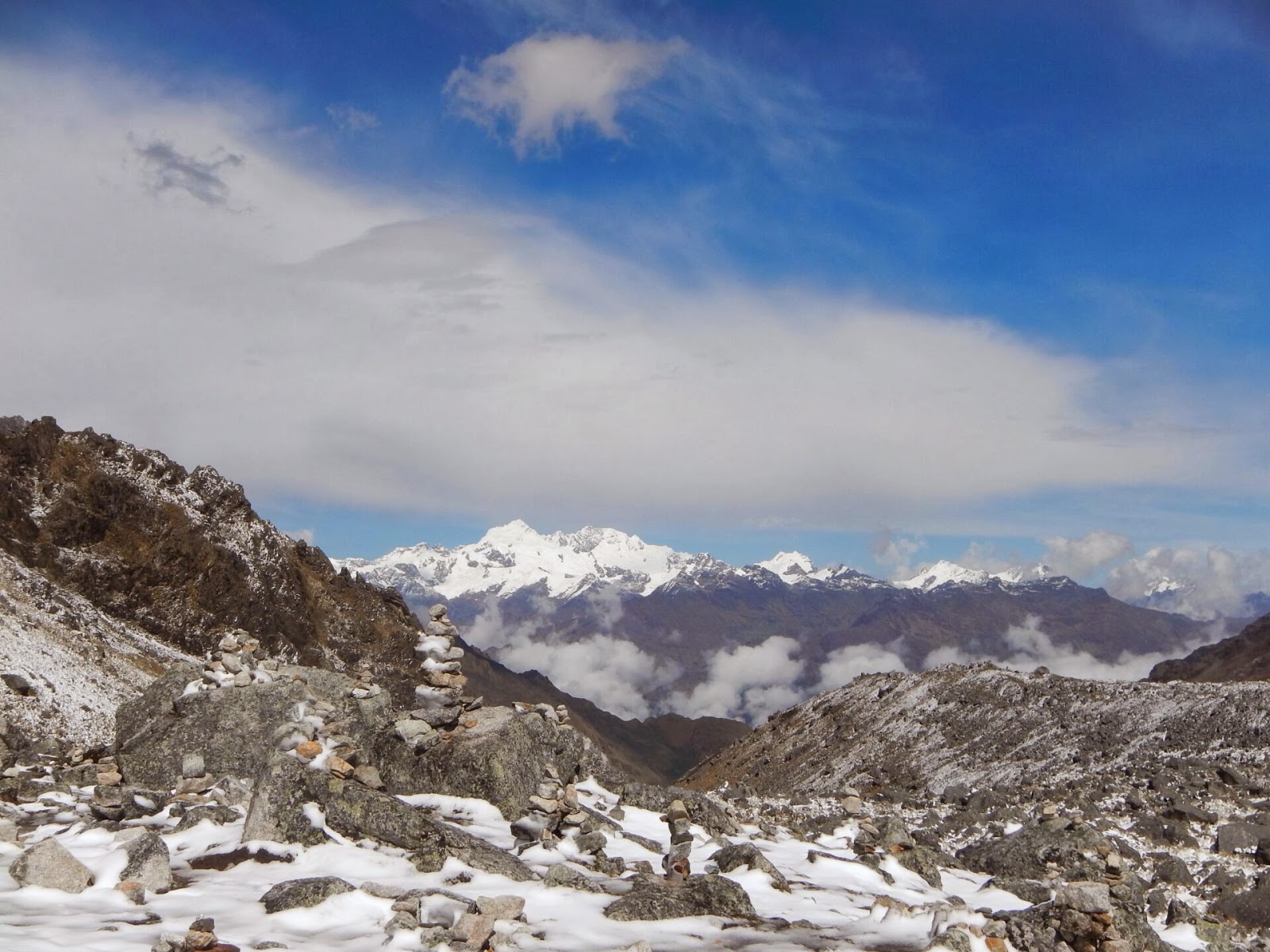
At the pass itself our group assembled for a quick group shot, the temperature had very quickly dropped to freezing in the strong wind. Three of the trekkers who were from Peru had never seen snow in their life and were snapping endless photos as they got caught up in the moment. It really was an impressive point along the trail, especially with the piles of spiritual stones alongside the snow edge as the view tapered off into the lush jungle behind.


Next we began to descend through the grass lands and down towards the Jungle where our camp at Chullay would be waiting, cold beers and assembled hammocks prepared. Tom and I raced off again, missing one of the turnoffs in the early jungle stages that wound us up the mountain instead of down towards the river. We recovered quickly and were back on track after some minor bush bashing.


Deeper in to the jungle we wound along side a river that swells in early months to levels that force the trail to be closed, coinciding with the time they also close Machu Picchu for annual regrowth. Along this section we passed lots of wild fruits including jungle strawberries, passion fruits, mangoes and even the Ayhuasca flower.


Our third camp included a visit to the nearby hot spring which dissapointigly would not let beers be taken anywhere near the waters edge, also a dismal 29c. Back at the camp a bonfire was set up where we drank the night away with a local Inca Tequila brew, the guide getting a little too involved and ensured laughs all round with an impressive display of drinking skills, leaving him a little worse for wear the next morning as he trailed well behind the group.

Winding our way along the train tracks with glimpses of the famous Incan city high on the mountain top, we ventured in to Aguas Calientes for the final nights stay in a hotel, this being the closest accommodation's to the ancient ruins. It was Halloween and a horde of children burst in to our dinner celebration to scam candy off us, unfortunately they had not quite mustered up the traditional dialogue as the simply continued to repeat "Halloween.. Halloween.. Halloween".


In order to make it up to Machu Picchu for sunrise we departed at 4am, inspired by the guides offer of a free pizza should I beat his record time of 45 mins up the few thousand stairs to the entrance, I never did get rewarded for my 39 minute feat. Being first through the gates meant that we managed to get a few rare snaps of the deserted ruins before hoards of lazy tourists were bussed up from the town below, apparently now they are even talking about building an airport in Aguas Caliente!

We were given a walking tour of the city that outlined some of the amazing architecture and farming methods invented by the Incans. The city consists of over 600 terraces that not only served for agriculture, but also helped to prevent landslides. Stones were carefully carved by master stonemasons so they fit together without the use of mortar, special concave sides fit in to the convex side of the next stone and angles of windows and doorways ensure the structure is earthquake proof. There is even an advanced drainage system built in to the city that is the key to its longevity.


After a quick photo shoot with a friendly Llama I made my way up Wayna Picchu which is the smaller of the two side mountains next to the ruins (the bigger being Machu Picchu Mountain). This epic onslaught of steps added to what was definitely the hardest day of the trek. Upon slugging it out to the top, we were rewarded with an unbelievable view of the archaeological sight from the mountain top temple.


Back in Cusco I rewarded all my hard work with a very mediocre all you can eat Indian feast, again tempting fate with the buckets of slosh that looks well past serving date. Machu Pichu is an amazing feat of human ingenuity, its one thing that everybody should visit at least once in their life to see what the Incan elite so carefully preserved from the Spanish invasion by destroying all trails and evidence of its existence.


Friday, 25 October 2013

Copacabana

As my Bolivian adventure draws to an end, the hippie draw card town of Copacabana is the final destination before entering Peru. Lake Titicaca which lies 3,812m above sea level and has a surface area of 8,372 square kilometres, borders Peru and Bolivia. A mate back home said I would be eating trout for breakfast, lunch an dinner, he wasn't wrong either. Here the menu of the day which usually consists of a soup choice, then a main (which is primarily grilled trout) and a small desert, will set you back less than $3 Aussie, all in an idyllic lakeside setting.


I'd decided to stop here to visit the largest island on the lake, Isle Del Sol which lies in the Bolivian territory. This ancient Incan holy site is said to be where Viracocha, the bearded god who created the universe, once rose from the waters and created the sun at this location. Feeling tired and uncomfortable from a developing Bolivia stomach bug I hastily checked in to a hotel room, not noticing the multi level mattress that was propped up on various angles from sacks of local produce below, easily the least comfortable bed I have ever slept in. At least the trout at sunset ended the day on a high note.


There's two options to get a boat over to Isle Del Sol, the first boat leaving at 8:30am followed by a second at 1:30pm. With no need to pre book tickets I wandered down and positioned myself on the roof top bench with another Aussie as we  cruised over on the surprisingly chilly ride thanks to the wind which had quickly picked up. We decided to walk from the North to the South of the island which is generally the most popular route taking around 3 hours, from there you can either take the 4:30 boat back to the mainland or spend the night at one of the many hostels, including a magnificent view of the lake.


At the northern point of the island there's a few Inca ruins including an Inca table once used for spiritual ceremony's, a puma rock that is supposed to look like a puma from a certain angle (obviously not the one I was looking from) and some ruins that were once used to contain various gifts including gold, silver, virgins and Llamas to stored and sacrificed.


After  very hilly walk, we bid farewell to half the group who was heading back to the mainland(tackling the 1,000 Inca steps on their way down) and checked in to our hostel to sample a few glasses of local red as the sun crept down to the horizon. Upon my suggestion of the Las Velas restaurant that I had heard some good review we begrudgingly headed back up the hill for a mediocre candle light dinner, redemption for my advice came in the form of an amazing sunset view across lake Titicaca.